One operating view for audit, stores, and finance
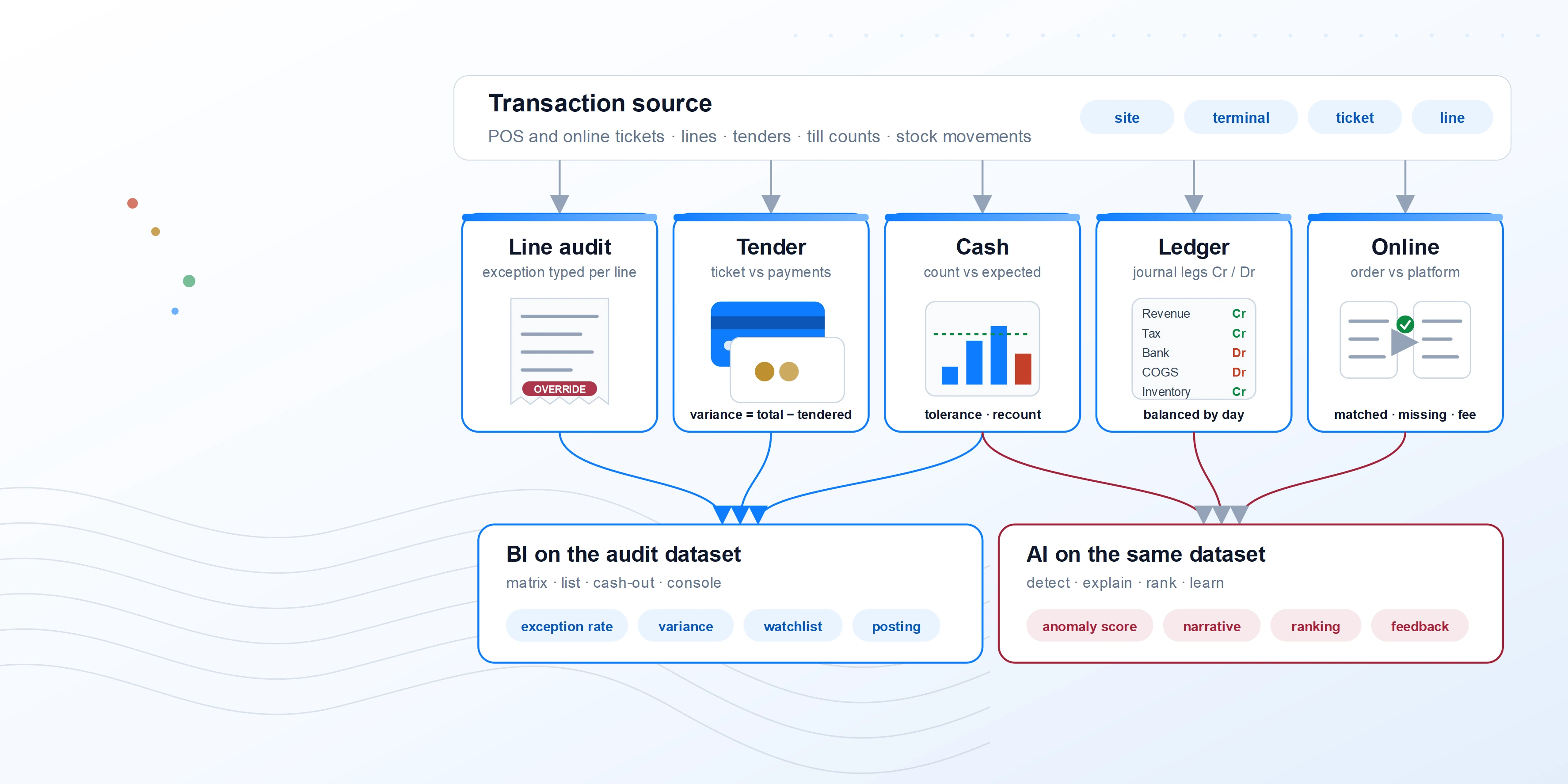
Cybex Sales Audit brings transaction controls, reconciliation, and exception handling into the retail operating routine. Auditors investigate and document findings, store teams provide local evidence, and finance approves the changes that affect the books.
The module uses connected data from the Sales Audit Data Platform. Its focus is the work people perform: what is missing, what differs, who owns the next action, and whether the result has been accepted downstream.
Deployment scope is configured around your source systems, policies, roles, and operating schedule. Confirm connector coverage and enabled automation during discovery.
An auditor workbench built around the next action
Organize the queue by business date, financial exposure, severity, age, and ownership. Open a finding to inspect linked evidence, distinguish a source-data error from an operating issue, and record a correction or an explained exception.
Cases can group related findings without losing their individual rule history. A proposed adjustment remains distinguishable from an approved change, and closing a case requires a documented outcome.
Run a controlled daily close
Confirm completeness
Identify expected stores, registers and feeds. Surface missing or rejected activity before approval.
Resolve blockers
Reconcile cash and tenders, investigate blocking findings, and obtain supporting evidence.
Approve and release
Apply authorized corrections, revalidate, and release the approved posting units.
Confirm delivery
Track receiving-system acceptance, unresolved settlement items, and controlled retries.
Store close and bank settlement have different completion dates. Keep pending receipts visible after the store-day is approved. Reopening a closed day records who authorized it, why, and which adjustments followed.
Use ML to focus investigation
Rank unusual returns, overrides, discounts, and recurring variances against relevant store, channel, season, and promotion context. Present the contributing factors and linked transactions so the auditor can assess the finding.
Mandatory validation, balancing, and approval checks stay in force regardless of a score. A high score is a reason to investigate. Reviewer dispositions feed a controlled evaluation process before rule or model changes are released.
Read the retail principles behind exception prioritization.
Connect the systems that own the evidence
Batch or intraday processing is agreed per source. Near-real-time availability depends on the connected systems and deployment; the workbench should show freshness and completeness rather than imply a universal refresh rate.
Explore the warehouse model, BI measures, and AI feature foundation.
Measure operational outcomes
Establish baselines for the stores, channels, and tenders in scope. Assess improvement using on-time store close, aged unresolved value, case resolution time, accepted postings, and actionable findings among reviewed ML alerts.
Report confirmed recoveries and measured staff time separately. Validate processing capacity on representative volumes and infrastructure. Targets are agreed for the deployment rather than presented as universal accuracy, throughput, or ROI promises.
Scope, prove, and expand the module
Define the operating scope
Agree on stores, tenders, source coverage, roles, controls, and success criteria.
Validate the foundation
Map source data and reconcile representative periods with existing records.
Prove the audit workflow
Run alongside current practice and verify approvals, exceptions, posting, and recovery.
Expand with evidence
Evaluate ML in observation mode, review outcomes, and authorize the next scope.
Schedule and rollout readiness depend on source access, integration gaps, and control requirements. The data-platform acceptance plan defines the technical evidence needed before operational rollout.